Loading content
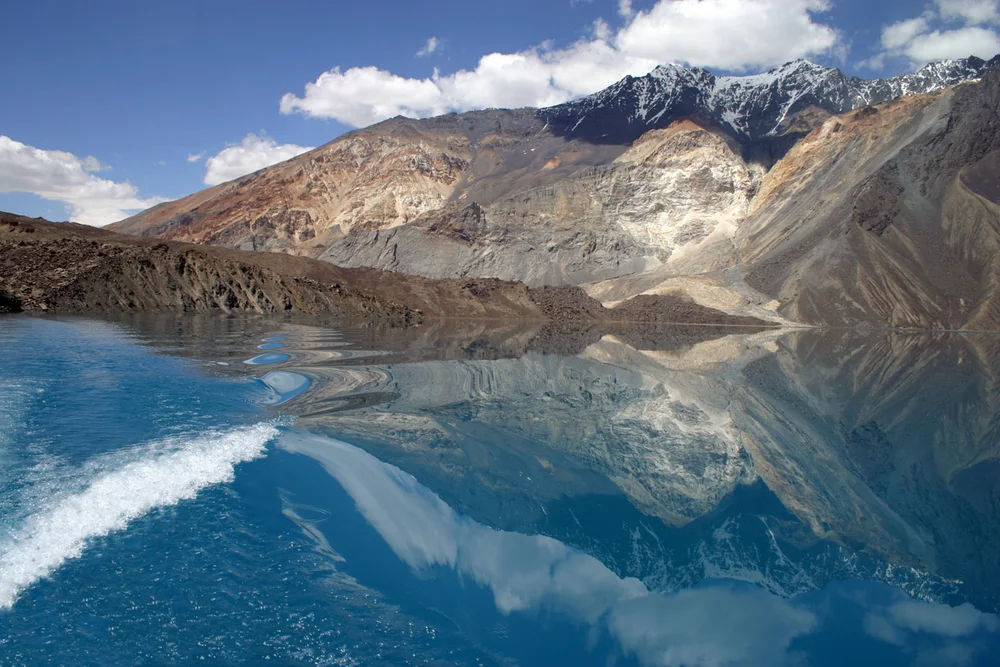
About
A shared platform for water, glacier and climate action
A high-level international scientific and policy dialogue connecting scientific knowledge, cutting-edge technologies, innovative approaches and practical experience to advance integrated solutions for mountain water resources, glaciers, glacial lakes, disaster risk reduction and climate adaptation.
Conference overview
Evidence and technology for practical decisions
Organisation and support
The Conference will be organized by the Institute of Water Problems, Hydropower and Ecology of the National Academy of Sciences of Tajikistan, in collaboration with the Aga Khan Foundation and with the support of the Government of Switzerland through the project “Resilient and Adaptive Communities in a Changing Environment,” a joint initiative of the Governments of Switzerland and Tajikistan.
In light of climate change, the rapid retreat of glaciers, the increasing risk associated with glacial lakes, growing water scarcity and the need to adopt digital technologies, the integration of science, innovation and policymaking has become a key priority for the sustainable development of the water sector.
As a country that has taken a leading role in advancing the global water agenda and promoting glacier protection internationally, Tajikistan has created new opportunities for scientific cooperation and the application of modern technologies, particularly following the Fourth High-Level International Conference on the International Decade for Action “Water for Sustainable Development, 2018–2028” and the declaration of the International Year of Glaciers’ Preservation.
The Conference will bring together scientists, policymakers, practitioners, development partners and disaster risk reduction experts to advance knowledge, strengthen cooperation and promote innovative approaches to managing mountain water-related risks in the context of climate change.
Purpose
The overarching objective is to establish a high-level international scientific and policy dialogue platform that brings together scientific knowledge, cutting-edge technologies, innovative approaches and practical experience to advance evidence-based and integrated solutions for sustainable mountain water resources management, glacier and glacial lake systems, disaster risk reduction and climate change adaptation.
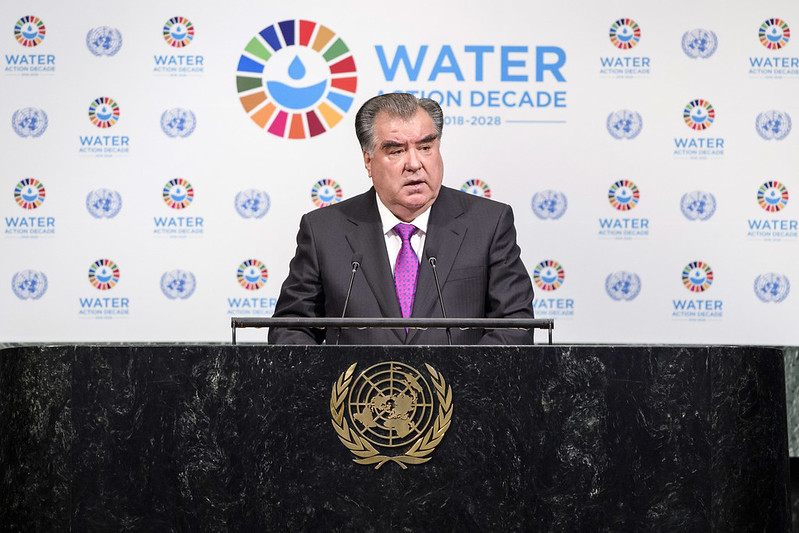
Every lost drop of glaciers contributes to the growing dangers for the future of humanity.
Emomali Rahmon
President of the Republic of Tajikistan
- 90%+
- of Tajikistan is mountainous
- 06
- programme areas
- 02
- working languages
- 02
- conference days
Conference objectives
Seven priorities, one shared direction
The conference connects evidence, modern technology and international cooperation across its full programme.
- 01
Evidence
Advance knowledge of climate processes, glacier dynamics, glacial lakes, mountain hydrology and water-related hazards.
- 02
Technology
Apply AI, machine learning, GIS, remote sensing, IoT, big data and digital twins to water monitoring and management.
- 03
Cooperation
Strengthen regional and international cooperation across science, policy, practice and development partnerships.
- 01
Advance scientific knowledge and understanding of climate change processes, glacier dynamics, glacial lake evolution, mountain hydrology and water-related hazards.
- 02
Present and exchange the latest scientific findings, technological innovations and best practices in monitoring, modelling, forecasting, assessment and sustainable management of water resources, glaciers and glacial lakes.
- 03
Explore and promote digital and emerging technologies — including AI, machine learning, GIS, remote sensing, IoT, big data and digital twins — for water-sector monitoring, modelling, early warning, risk assessment and decision-making.
- 04
Strengthen regional and international scientific and institutional cooperation in glacier monitoring, integrated water resources management, disaster risk reduction and climate change adaptation.
- 05
Facilitate meaningful dialogue among scientists, policymakers, practitioners, development partners and the private sector to support evidence-based policymaking and informed decisions.
- 06
Strengthen the science–policy–practice interface by translating scientific evidence, technological advances and practical experience into actionable recommendations and strategic measures.
- 07
Promote integrated and interdisciplinary approaches connecting climate science, hydrology, ecology, ecosystem conservation, disaster risk reduction and sustainable development.
Expected outcomes
From dialogue to cooperation and action
- 01
Stronger scientific, technical and institutional cooperation among research institutions, universities, public authorities, international organisations and development partners.
- 02
Science-based policy and technical recommendations to improve public policy and sustainable water resources management.
- 03
An international network of scientists, research institutions, universities and laboratories for long-term cooperation and joint research.
- 04
New partnerships for exchanging data, technologies, methodologies and best practices in glacier and glacial lake monitoring, mountain hydrology and climate-related water risks.
- 05
Wider application of AI, machine learning, GIS, remote sensing, IoT, big data and digital twins in water research, monitoring, modelling, forecasting and management.
- 06
Mobilised investment and technical assistance for joint initiatives in water management, glaciology, climate adaptation, disaster risk reduction and environmental protection.
- 07
Stronger scientific and professional capacities among researchers, practitioners, early-career scientists and young professionals.
- 08
Stronger science–policy–practice linkages for evidence-based decisions and the translation of research and innovation into effective policy and practical solutions.
- 09
Greater international visibility for Tajikistan as a contributor to scientific cooperation and water diplomacy in glacier protection, climate adaptation and regional water security.
Who takes part
An international, cross-sector community
- 01
Scientists and experts from academies of sciences, universities and research institutions
- 02
Representatives of relevant ministries and government agencies from Tajikistan and other countries
- 03
United Nations agencies and other international organisations
- 04
Development partners, non-governmental organisations and civil society
- 05
Private-sector institutions, professional associations and research communities
- 06
Early-career researchers, young scientists, technical specialists and emerging professionals
International context
Global commitments in view
The conference themes connect water, climate resilience, disaster risk reduction and ecosystem protection.
- 2015–2030
- Sendai Framework for Disaster Risk Reduction
- SDG 6
- Clean Water and Sanitation
- SDG 11
- Sustainable Cities and Communities
- SDG 13
- Climate Action
- SDG 15
- Life on Land
- Paris
- Commitments under the Paris Agreement